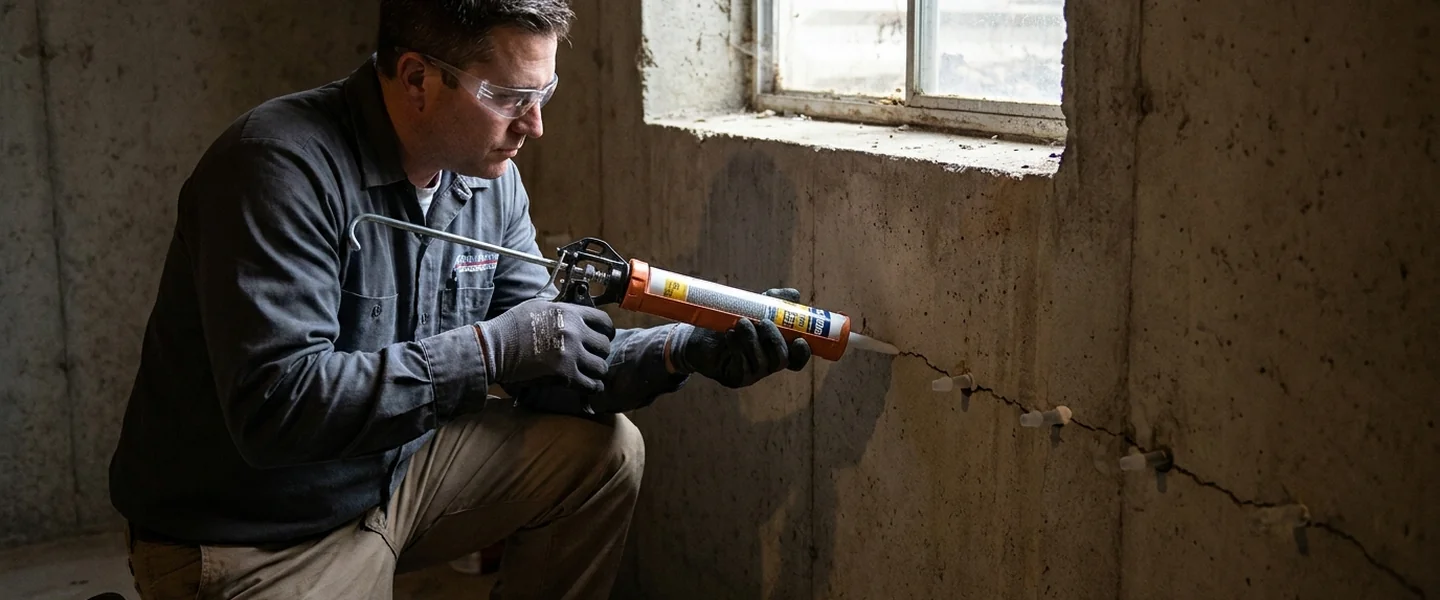
Foundation Crack Repair in Annandale, VA
Structural crack assessment and epoxy injection for Northern Virginia foundations — written diagnosis before any repair commitment.
Call Now: (571) 620-3358Foundation cracks in Annandale, VA homes range from cosmetic hairline fractures that require only monitoring to active structural cracks requiring immediate stabilization. The distinction matters enormously — the wrong diagnosis leads to either unnecessary repair costs or deferred repairs that worsen over time. Annandale VA Foundation Pros performs a physical inspection of every crack, assesses its orientation, width, and whether it is active or stable, and provides a written assessment before recommending any repair. Call (571) 620-3358 for a free inspection.
Foundation Crack Patterns in Northern Virginia Homes
Fairfax County's Piedmont clay soil drives the most common crack patterns in Annandale's postwar housing stock. Understanding what each pattern means helps homeowners prioritize correctly:
Diagonal cracks at door and window corners: The most common crack in Fairfax County's 1950s–70s colonials and split-levels. The door and window corners are stress concentration points — when the foundation below settles differentially, the drywall and mortar fail first at these corners. Diagonal cracks that are hairline-width and stable are lower priority; cracks wider than 1/8 inch or that are actively growing warrant inspection and potentially repair.
Stair-step cracks in exterior brick: Annandale's brick colonial and rambler stock develops stair-step cracks in the mortar joints when foundation settlement creates differential movement. Settlement-driven stair-step cracks typically open on the low side of the settlement — the corner that is dropping. Cracks where the brick unit itself has fractured (not just the mortar) indicate more significant force.
Horizontal cracks in basement walls: The most serious crack type. Horizontal cracks indicate lateral soil pressure (from Northern Virginia's heavy, wet Piedmont clay against the wall) is exceeding the wall's structural capacity. The wall is being pushed inward. This is a structural emergency — do not defer horizontal wall crack inspection. Call the day you notice it.
Vertical cracks in poured concrete walls: Common in Northern Virginia's 1960s–80s poured concrete basement walls. Vertical cracks are typically settlement or shrinkage cracks rather than lateral-pressure cracks. They require waterproofing treatment to prevent water intrusion but may not require structural repair if the wall is not bowing.
Project Details
| Service | Foundation Crack Repair (Epoxy Injection & Assessment) |
|---|---|
| Inspection Timeline | Free, same-week scheduling across Fairfax County |
| Repair Method | Epoxy injection (structural), polyurethane foam (water-stopping), or surface sealing — matched to crack type and cause |
| Crack Documentation | Width measurement, orientation, activity assessment, photo documentation provided at inspection |
| Standalone vs. Combined | Crack repair may be standalone or combined with pier installation if settlement is the cause |
| Warranty | Workmanship warranty on injection repairs; lifetime on pier components if settlement repair is combined |
| Pricing | Quoted per job after free on-site inspection — every quote is itemized in writing |
Our Crack Assessment Process
- 1Physical inspection. We assess every crack identified — measuring width, mapping orientation (diagonal, vertical, horizontal, stair-step), and checking for displacement (is one side of the crack higher than the other?). Displacement indicates shear movement, not just tension cracking.
- 2Activity assessment. We determine whether each crack is active (still growing), stabilized (growth stopped), or cyclical (opens in summer drought, closes in winter rain). Each classification drives a different response.
- 3Root cause identification. Is the crack caused by settlement (piering needed), lateral pressure (wall stabilization needed), normal concrete shrinkage, or a drainage problem accelerating moisture cycling? We identify the cause, not just the symptom.
- 4Written assessment. We provide a written assessment that documents each crack, its classification, the probable cause, and the recommended action (monitor, seal, epoxy inject, or structural repair). This document is yours regardless of whether you proceed with us.
- 5Repair — if warranted. Structural cracks get epoxy injection, which restores tensile strength to the crack zone. Water-entry cracks get polyurethane foam injection, which remains flexible and seals water intrusion. Surface sealants are applied where appropriate.
- 6Monitoring plan. For cracks classified as "monitor," we mark the crack tips with pencil marks and date them so you can track any future growth. We explain what size or rate of change should trigger a callback.
Common Crack Scenarios in Annandale Homes
Postwar Brick Colonial Corner Cracks
The most common pattern in Annandale's 1950s–60s brick colonials — diagonal cracks above doors and windows, often most pronounced at the front entry corners. Caused by front-of-house perimeter settlement as the shallow footings respond to decades of clay cycling. Front yard trees accelerate the pattern at specific corners.
Basement Wall Horizontal Cracking
Found in older poured concrete and concrete block basement walls throughout Annandale and Falls Church. Northern Virginia's heavy clay holds moisture and exerts significant lateral pressure after wet winters. Block walls are more vulnerable than poured concrete — the mortar joints are the failure points.
Garage Slab Corner Cracks
Attached garage slabs settle independently of the house foundation in many Annandale ranches and split-levels. The garage slab cracks at the corners as the fill soil below it compresses. Usually not structural for the house, but the crack pattern documents settlement history and should be assessed.
Interior Floor Slab Cracks
Basement floor cracks in slab-on-grade and basement-floor slabs across Fairfax County are common after decades of Piedmont clay moisture cycling. Hairline floor cracks are typically cosmetic; wider floor cracks (1/4 inch or more) or cracks with vertical displacement between sides are structural indicators.
Warranty in Detail
Epoxy injection workmanship warranty: covers the injected crack remaining structurally bonded. What it does not cover: new cracking adjacent to the original crack if the underlying settlement continues (if piering is needed, injection alone does not stop the cause). Polyurethane water-stop injection workmanship warranty covers water intrusion through the treated crack for the warranty period. The full warranty terms — including what is and is not covered — are in writing in the estimate before you sign.
How We Quote (Without Quoting on the Phone)
We don't quote crack repair without seeing the cracks. The repair method, scope, and whether crack injection is the appropriate solution (vs. pier installation to stop the cause) depends entirely on what we find on-site. A phone quote is either a guess or a blank check that adjusts after we arrive. We schedule the free inspection, provide the written assessment, and you decide what to do with the information — whether or not that involves hiring us.
After Crack Repair — What to Expect
Epoxy injection cures within 24–72 hours; the repaired zone achieves structural strength exceeding the original concrete. During curing, avoid water contact with the injection ports. We remove ports after cure and grind flush if needed. Expect minimal surface evidence of the repair — the finished wall will show the crack line but no ports. For polyurethane water-stop repairs, the flexible foam remains in place permanently; the crack will appear sealed. We recommend monitoring adjacent crack zones for any new activity over the following 12 months.
Foundation Crack Repair FAQs — Annandale, VA
How do I tell if a crack in my Northern Virginia home is structural?
Width, orientation, and displacement are the key factors. Cracks wider than 1/4 inch, horizontal cracks in basement walls, cracks where one side is higher than the other, or cracks that grow measurably over months are all structural indicators. We assess and classify every crack at the free inspection — you'll leave with a specific answer for each crack, not a general statement about "monitoring."
Why does my crack open up in summer and close in winter?
Fairfax County's Piedmont clay dries in summer drought, contracting and allowing the foundation to settle slightly. When fall and winter rains rehydrate the clay, the soil expands and partially closes the crack. This seasonal cycling is normal for Northern Virginia foundations. The critical question is whether the crack is wider after each cycle than it was the year before — progressive growth means net settlement that requires repair.
Can I just caulk or paint over foundation cracks before selling?
Virginia law requires sellers to disclose known material defects. A painted-over crack that a home inspector finds is worse than a disclosed and documented crack. We see this frequently in Annandale resale transactions. A proper written inspection report with crack classification and recommended action is more valuable for a sale transaction than cosmetically hidden cracks.
Does crack injection fix the cause of the crack?
Epoxy injection restores structural integrity to the cracked zone — it does not stop the cause. If the crack was caused by settlement, the settlement will continue after injection unless piering is done. We always address both in the written assessment: the crack repair recommendation and the cause-correction recommendation. You can choose to do only one, but the report will tell you what the tradeoff is.
How much does foundation crack repair cost in Annandale, VA?
Call (571) 620-3358 for a free written estimate. Cost depends on crack type, number of injection ports needed, and whether the repair is standalone or combined with pier installation to address the underlying settlement.
Should I repair cracks before listing my home for sale?
Yes, if they are structural. A properly repaired and documented crack (with a warranty) is a better disclosure position than an unaddressed structural issue. Buyers' home inspectors in the Northern Virginia market are experienced with Fairfax County foundation conditions — they will classify and document every crack they find. We can provide inspection documentation that describes what was repaired, what method was used, and what the warranty terms are.
Annandale-Specific Considerations
Annandale's housing stock includes a high proportion of 1950s–60s split-level and raised-ranch construction built on concrete block basement walls rather than poured concrete. Concrete block walls are more vulnerable to horizontal cracking under lateral pressure than poured walls because the mortar joints are weaker than the blocks. For homeowners in the Braddock Road, Columbia Pike, and Little River Turnpike corridors where block basement construction is common, horizontal crack inspection should be an annual visual check — particularly after wet winters when the saturated Piedmont clay is at maximum lateral pressure.
The Columbia Pike corridor also includes some of Fairfax County's most significant mature tree canopy — large oaks, tulip poplars, and silver maples in front and side yards. Root desiccation is a significant contributor to corner settlement in this area. If you see a crack concentrated at one corner with large trees nearby, root-driven soil drying is the likely cause. The repair recommendation will include drainage guidance to compensate for the moisture extraction.
Free Foundation Crack Assessment in Annandale, VA
Written diagnosis for every crack — active, stable, or cosmetic. No pressure to repair. Serving all of Fairfax County.
Call (571) 620-3358Related reading: House Leveling & Piering | Bowing Wall Stabilization
What You Get in Our Quote vs. the Lowball Bid
We don't compete on the lowest sticker price — we compete on the quote that gets the job actually done. Here is what is included in every quote we write, and the cut-corners that show up in cheaper bids.
Included in our written quote
- Engineer-style elevation + crack assessment
- Soil and drainage evaluation
- Written quote with pier counts + warranty terms
- Photo documentation of every crack/movement
- Permit-pulling where required
- Post-install elevation re-check
Cut corners in the lowball bid
- Free-quote with no actual inspection
- Pier-count guesses without measurements
- Subcontracted installation crews
- Warranties that exclude common failure modes
- Pressure to sign at the kitchen table
- Same-day pricing tricks