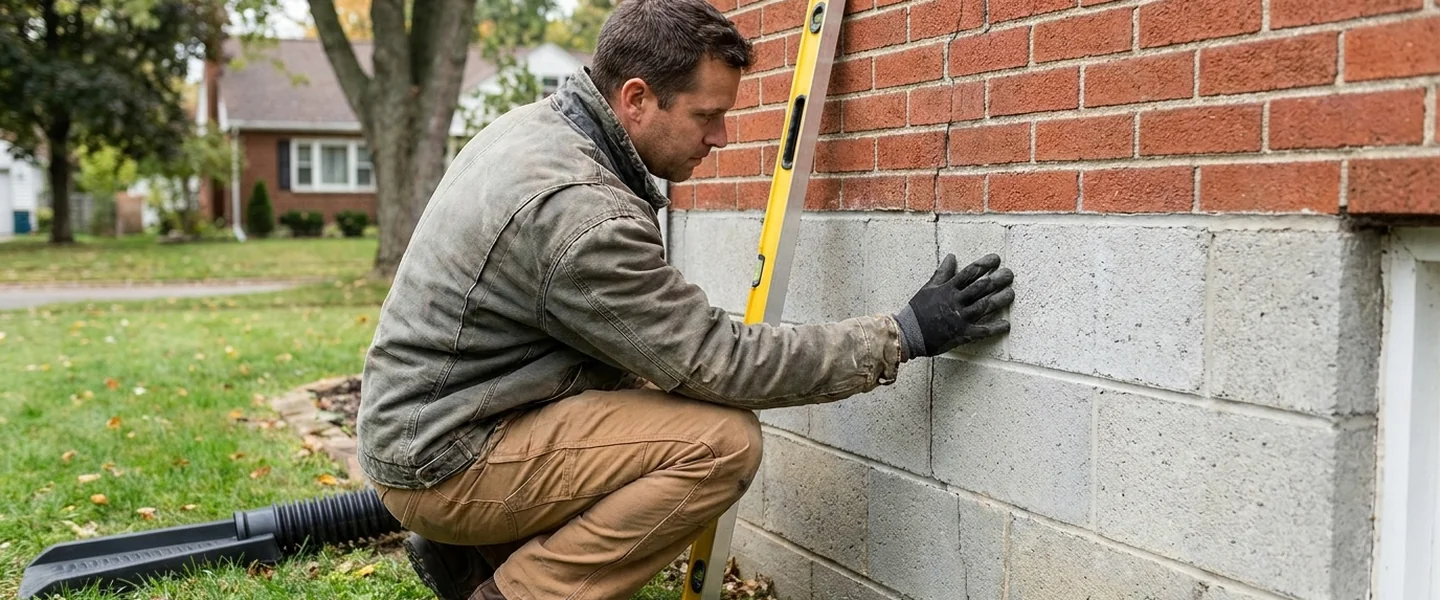
Foundation Repair in Springfield, VA
Foundation crack repair, piering, waterproofing, and wall stabilization for Springfield homeowners in the 22150, 22151, and 22153 zip codes.
Call Now: (571) 620-3358Springfield, VA sits in southern Fairfax County along the I-95 and Franconia-Springfield Parkway corridors — a dense residential area developed primarily in the 1960s and 1970s. The split-level and colonial homes that define Springfield's neighborhoods were built on expansive red clay soils that have been cycling through wet winters and dry summers for 50-plus years. The cumulative effect — foundation settlement, basement wall cracking, and chronic water entry — is exactly what Annandale VA Foundation Pros addresses. We serve Springfield homeowners in the 22150, 22151, and 22153 zip codes with the full range of foundation repair services. Call (571) 620-3358 for a free inspection and written estimate.
Why Springfield Foundations Show Wear
Springfield's 1960s–70s construction was built during a period when shallow footings and standard clay-soil site prep were normal practice. The Piedmont red clay in southern Fairfax County has an active shrink-swell zone that extends 8–12 feet below grade — the same depth range these original footings were set in. Decades of this cycling, combined with Springfield's mature tree canopy along Keene Mill Road and Old Keene Mill Road, creates the specific settlement and crack patterns we diagnose regularly in this area.
The Springfield Town Center redevelopment and the Franconia-Springfield Metro area have brought significant new construction and infrastructure work adjacent to existing residential neighborhoods — vibration and soil disturbance from nearby construction can accelerate settling in older foundations that were already marginally stable.
What We Typically Find in Springfield Foundations
- Split-level settlement at the garage-to-living-space transition: Springfield's split-level homes frequently show differential settlement between the garage slab and the main house foundation. The crack at the interior transition point — where the split-level steps from garage level to living level — documents the relative movement. This is typically a piering or drainage problem, not just a cosmetic crack.
- Basement wall water entry in the 22151 zip: The 22151 area includes neighborhoods with heavy clay retention against downhill basement walls. Wet-season water entry through the floor-wall joint is common here, particularly in homes where the original exterior grading has settled toward the house over decades.
- Diagonal cracks above windows in brick veneered colonials: Springfield's 1970s brick colonials show diagonal cracking at door and window corners as the front perimeter footings respond to clay contraction in summer. These cracks typically open in July and partially close in November — the seasonal cycling pattern that indicates ongoing active settlement.
- Sump pit problems in older installations: Many Springfield homes have original sump pits from the 1970s that are unlined or have deteriorated clay-tile liners. Pumps set in these pits fail prematurely from sediment ingestion. Pit relining is a routine part of our sump pump work in this area.
Our Process for Springfield Homes
- 1Free on-site inspection. We assess the foundation walls, basement floor, and exterior grading. We measure settlement across the slab or perimeter, identify water entry points, and check sump system condition.
- 2Written crack assessment. Every crack documented — orientation, width, activity status, probable cause. This report is yours regardless of whether you proceed with repair.
- 3Itemized written estimate. Scope, materials, warranty terms, and timeline specified before you commit. We name the pier model, the drainage tile spec, and the warranty coverage — not generic descriptions.
- 4Scheduled repair. We schedule within our normal lead time for the Fairfax County area. Springfield is in our regular service rotation and we don't add surcharges for southern Fairfax County locations.
- 5Final walkthrough and documentation. Warranty documentation, maintenance instructions, and a walkthrough of what we installed before we leave.
What We Typically See in the 22150, 22151, and 22153 Zip Codes
The 22150 zip code along Old Keene Mill Road includes a high proportion of 1960s split-levels on slab foundations — a foundation type that shows clay-movement effects through interior floor cracking and door frame racking rather than basement wall issues. If your Springfield split-level has floors that feel uneven or doors that have gradually stopped latching, differential slab movement is the probable cause.
The 22153 zip — the Pohick and Saratoga neighborhoods further south toward Lorton — includes a mix of 1970s and 1980s construction with both slab and basement foundations. The 1980s construction in this area used poured concrete basements more consistently than the earlier block construction common in northern Fairfax County, but the expansive red clay soil means settlement and cracking are still common after 40-plus years.
Foundation Services for Springfield
- Foundation Crack Repair — crack assessment, classification, and epoxy or polyurethane injection
- House Leveling & Piering — push pier and helical pier foundation stabilization with lifetime manufacturer warranty
- Bowing Wall Stabilization — carbon fiber straps, wall anchors, and steel I-beam bracing for inward-moving walls
- Basement Waterproofing — interior French drain systems with sump pump discharge, lifetime warranty on drainage system
- Sump Pump Installation — primary and battery-backup sump systems; pit relining included when needed
- Egress Window Installation — Fairfax County permit, concrete saw cut, waterproofed well with drain
Springfield Foundation FAQs
My Springfield split-level has uneven floors. Is that a foundation problem?
Possibly. Uneven floors in Springfield split-levels can be caused by differential slab settlement (one portion of the slab has dropped relative to another), wood subfloor deflection over a crawlspace, or post-and-beam settlement under a raised section. We assess the cause at the free inspection — the repair approach differs significantly depending on which it is.
Do you service all of Springfield's zip codes?
Yes — 22150, 22151, 22152, and 22153. We also service the adjacent West Springfield and Franconia areas in the same corridor. Call to confirm if you're on the edge of our service area.
How does Springfield's red clay differ from other Fairfax County soils?
Southern Fairfax County's Piedmont clay tends to be redder and higher in iron content than the clay in central and northern Fairfax County, but its shrink-swell behavior is similar. The active zone depth, seasonal cycling pattern, and the foundation repair approach are the same across the Fairfax County Piedmont — what varies is the specific construction era and foundation type in each neighborhood.
Can I get a same-week inspection in Springfield?
Usually yes. We schedule free inspections across Fairfax County and typically have availability within the same week for most locations. Call (571) 620-3358 and we'll find a time that works.
Is the lifetime warranty transferable when I sell my Springfield home?
Yes. Pier manufacturer warranties (ECP and Chance/Hubbell) transfer to subsequent owners at no charge with written notification. Our drainage system lifetime warranty is also transferable. We provide the transfer documentation at project completion — it's a positive disclosure item in a Fairfax County real estate transaction.
Free Foundation Inspection in Springfield, VA
Written assessment, lifetime warranty, locally owned. Serving 22150, 22151, 22152, and 22153.
Call (571) 620-3358Nearby areas: Burke | Falls Church | Fairfax